When the Ceremony Ends: Returning to Everyday Life With Awareness
When the Ceremony Ends: Returning to Everyday Life With Awareness

Greetings from Secwépemcúl̓ecw.
I am Cheryl Matthew, PhD, a Secwépemc author, educator, storyteller, healer, and land steward.
I work at the meeting place of ancestral teachings, scholarly research, ceremony, land, and everyday life.
The fire has gone quiet.
The circle has opened.
The retreat bag is back beside the front door, the dishes are in the sink, and tomorrow’s responsibilities are waiting.
Something extraordinary may have happened.
Now the work of returning begins.
The journey home is part of the experience
A profound ceremony, retreat, teaching, or healing experience can change the way we see ourselves and the world around us.
For a time, the ordinary may feel brighter.
A familiar road may carry new meaning.
A conversation may reveal a truth you were not ready to hear before.
Then you return home.
You answer messages.
You return to work.
You prepare meals, care for family, manage appointments, and move through the familiar rhythm of daily responsibilities.
This return can feel tender.
It can also feel confusing.
The experience may have been clear while you were there, yet difficult to understand once you are back in ordinary surroundings.
This does not mean the experience has disappeared.
It may mean that its meaning is still taking shape.
Healing is not always dramatic.
Sometimes it looks like resting before answering.
Sometimes it looks like telling the truth with care.
Sometimes it looks like choosing a different response in a conversation that once pulled you into an old pattern.
The extraordinary begins to reveal itself through the ordinary.
Let the experience settle before you decide what it means
When something meaningful happens, there can be a natural desire to explain everything immediately.
We may want to name the lesson, identify the next chapter, and make a complete plan for our future.
Patience offers another way.
You can allow an insight to remain an insight for a while.
You can notice what returns without forcing a conclusion.
You can make space for understanding to deepen through time, relationship, reflection, and lived experience.
In Everyday Intentions: Indigenous Wisdom for Healing, Integration and Intentional Living, I write:
“Rather than becoming frustrated by what you do not yet understand, receive it with gratitude and trust that what has been given will return when the time is right. Your responsibility is not to force meaning. Your responsibility is to remember. To write. To reflect. To return. To live the teachings as they reveal themselves throughout your life. This is the gift of remembrance.”
Returning is not a single act.
It is a rhythm.
Remember.
Write.
Reflect.
Return.
Live.
Begin with rest
Rest is one of the first ways we honour a profound experience.
After an intensive retreat, teaching, or ceremony, the body and mind may need quiet before they are ready for analysis or action.
You might begin by asking:
- What would help me feel more settled today?
- Where can I create a little more spaciousness?
- What responsibilities are essential, and what can wait?
- What helps me return gently to my daily rhythm?
Rest does not need to be elaborate.
It may be an early night, a nourishing meal, a slower morning, or time away from constant notifications.
It may be sitting near a window and letting the day unfold without demanding an answer from yourself.
There is wisdom in allowing the body to catch up with the spirit.
Write before the details fade
Writing gives an experience somewhere to live.
You do not need to produce a polished account.
You do not need to interpret every image, feeling, or realization.
You can begin with what you remember.
Consider these questions:
- What moments remain most vivid?
- What did I notice about myself?
- What felt familiar?
- What felt new?
- What emotions are still present?
- What questions have emerged?
- What am I grateful to have received?
- What might I understand differently with more time?
- What do I want to remember six months from now?
Write in sentences, fragments, lists, or sketches.
Record the details that may otherwise become blurred by the pace of daily life.
A few honest lines can become a point of return.
The purpose is not to create a perfect interpretation.
The purpose is to stay in relationship with what has been revealed.
Use the whole self as a place of reflection
A powerful experience can touch the heart, mind, body, and energy.
Returning becomes easier when we notice all four dimensions rather than focusing only on the story in our thoughts.

You might reflect on the following:
Heart: What emotions are asking for attention?
Mind: What thoughts or questions continue to arise?
Body: What sensations, needs, or changes in energy are present?
Energy: What is restoring me, and what is leaving me depleted?
This kind of reflection is not a test.
There is no perfect score.
It is an opportunity to notice where you are and what may need care.
The Medicine Wheel visual above can support a personal moment of reflection. In Everyday Intentions, balance is not presented as a fixed state that we achieve once and maintain forever. It is a relationship we continue to tend.
Some days, the heart may feel open while the body needs rest.
Some days, the mind may understand something that the emotions have not yet absorbed.
Some days, the most aligned action is to pause.
Awareness makes room for the whole person.
Share with trusted relationships
Not every experience needs to be shared widely.
Some experiences need time, privacy, and respectful attention.
Discernment can help you decide what to share, when to share it, and with whom.
You might ask:
- Does this person have the capacity to listen?
- Do I feel respected in this relationship?
- Am I sharing because I feel ready, or because I need immediate confirmation?
- What part of the experience is mine to hold privately?
- What support would help me remain grounded?
Discernment develops through relationship, humility, and experience.
As I write in Everyday Intentions:
“Discernment grows slowly through relationship, humility, and experience. It develops as we spend time in prayer, in silence, on the land, and in conversation with trusted Elders, Knowledge Keepers, and ceremonial leaders who know us well enough to ask difficult questions when needed.”
The right relationship may not give you a quick answer.
It may offer a thoughtful question.
It may help you notice where your actions are aligned with your values and where more reflection is needed.
Support does not always mean being told what to do.
Sometimes it means being accompanied while you listen more deeply to yourself.
Turn insight into one aligned action
A profound experience can bring many ideas.
You may want to change your schedule, repair a relationship, set a boundary, begin a creative project, return to a neglected responsibility, or release something that no longer reflects who you are becoming.
You do not have to do everything at once.
Choose one action that is clear, grounded, and possible.
Ask:
- What is one small action that reflects what I have learned?
- What would love, courage, honesty, or compassion look like today?
- Is there a conversation I can approach with greater care?
- Is there a boundary that would support right relationship?
- What commitment can I keep without making promises I cannot sustain?
Aligned action is often quiet.
It may be sending a message.
It may be declining an invitation.
It may be taking a walk instead of reacting.
It may be opening your journal again.
It may be making room for a relationship, responsibility, or practice that helps you live closer to your values.
Insight becomes trustworthy through the way we carry it.
Return again and again
The return home is not proof that the experience is over.
It is an invitation to notice how the experience continues to meet you.
A teaching may become clearer during an ordinary conversation.
A realization may deepen when you encounter an old pattern.
A new intention may become visible in the way you care for your body, speak to your family, relate to the land, or make decisions about your time.
This is where intentional living becomes practical.
Not perfect.
Not instant.
Practical.
You remember what matters.
You write what you are learning.
You reflect on your choices.
You return when you lose your way.
You live the teaching through patience, relationship, discernment, rest, and aligned action.
The path is not separate from daily life.
It is found there.
Everyday Intentions is Available Now
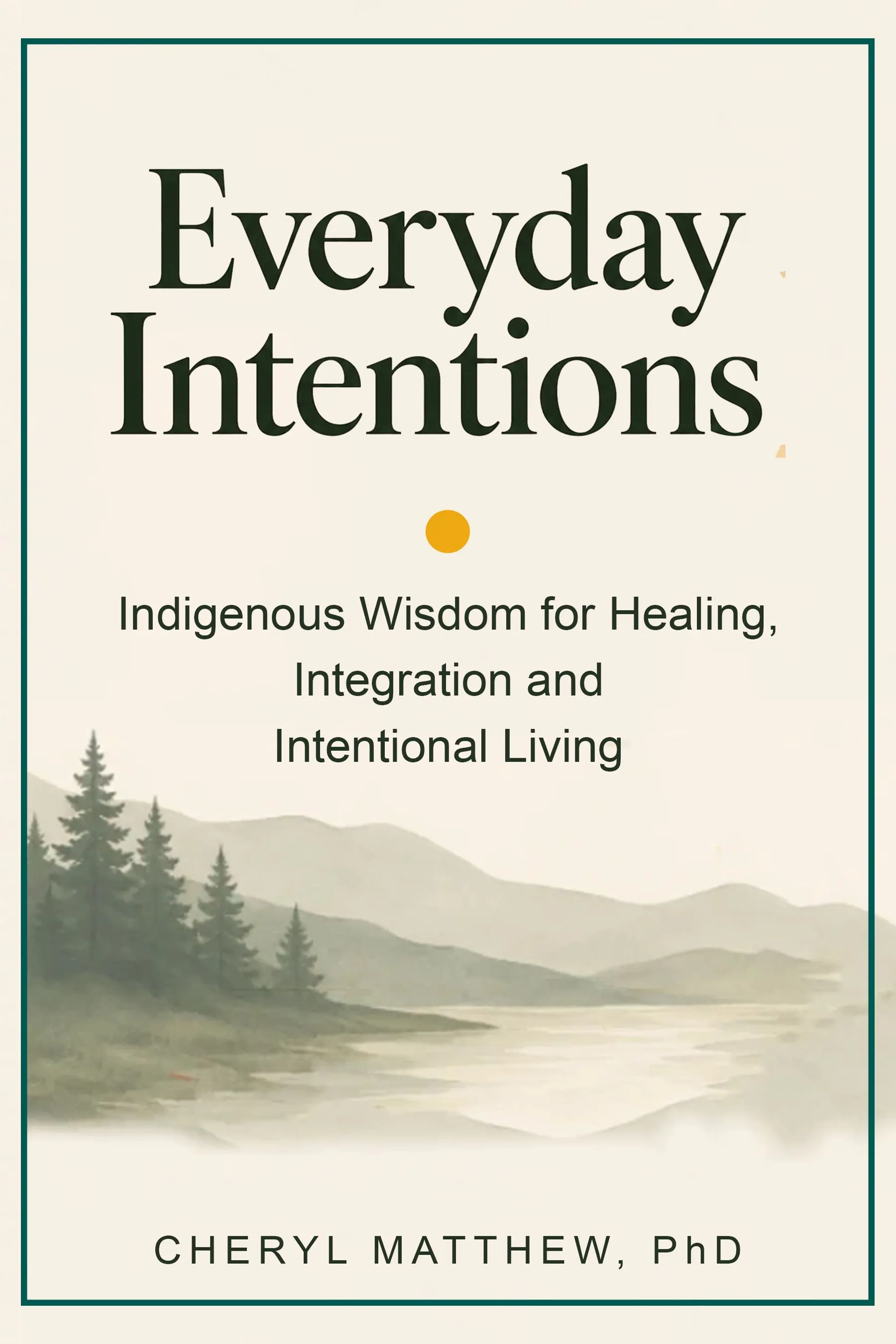
Everyday Intentions: Indigenous Wisdom for Healing, Integration and Intentional Living is a companion for those moving through healing, change, grief, identity, transformation, and the return to ordinary life after a profound experience.
Drawing on Indigenous teachings, ceremonial wisdom, reflective practice, and the Heart Resonance Framework, the book invites readers to cultivate awareness, understanding, release, transformation, and integration through the choices they make each day.
Everyday Intentions is Available Now.
Buy worldwide through Books2Read
For new books, launch updates, free resources, and reader opportunities from Wolf Star Press, join the Wolf Star Press newsletter.
You do not have to force the next step.
You can begin with remembrance.
Then writing.
Then reflection.
Then return.
One intentional step at a time.