September 12, 2026
Rest as Ceremony: Honoring the Body's Wisdom in a Busy Life
Rest as Ceremony: Honoring the Body’s Wisdom in a Busy Life
Weytk. Welcome.
I am Dr. Cheryl Matthew, a Secwépemc scholar, author, educator, storyteller, land steward, and ceremonial guide.
I write between worlds.
Between research and remembrance.
Between the working day and the sacred responsibility of returning to right relationship with ourselves, one another, the land, and spirit.
Outside, the ordinary world continues.
A kettle clicks off.
A truck turns onto the gravel road.
Boots wait beside the door.
A phone lights up with another message.
But beneath the noise, the body is speaking.
Quietly.
Constantly.
Wisely.
What if rest is not what comes after the important work?
What if rest is part of the work?
Rest is not a reward
Many of us learned to approach rest as something earned through completion.
Finish the report.
Answer the messages.
Care for everyone else.
Complete the errands.
Then, perhaps, rest.
This pattern creates a life where the body receives attention only after it has reached its limits.
A different question is possible.
What would change if rest became a deliberate part of the day before exhaustion arrived?
Rest is not laziness.
Rest is not a failure of discipline.
Rest is not a retreat from responsibility.
Rest is a way of listening.
It is a way of honouring the body as a living source of knowledge, memory, protection, and connection.
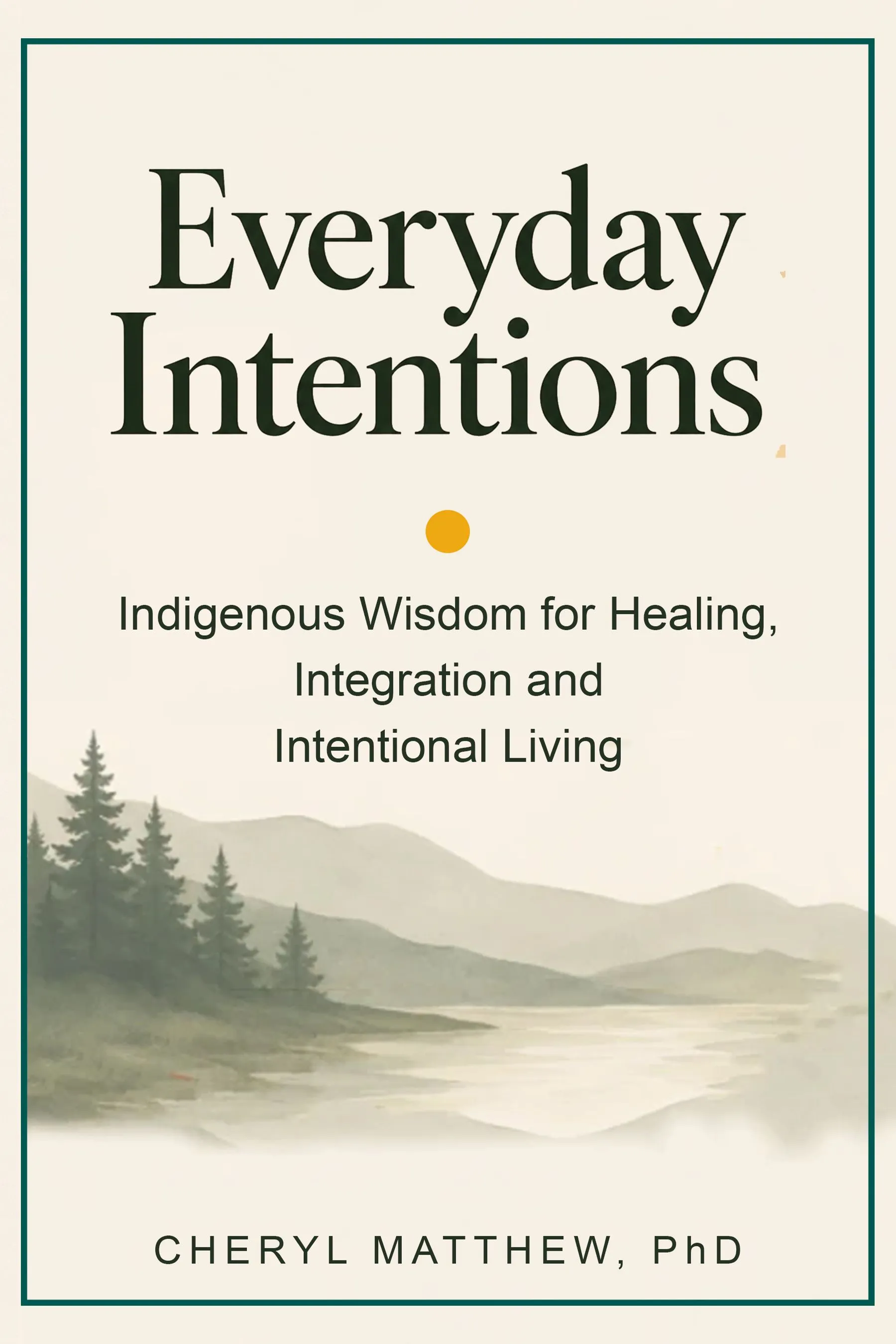
In Everyday Intentions: Indigenous Wisdom for Healing, Integration and Intentional Living, I explore how ceremony can live within ordinary moments.
A pause can become ceremony.
A meal can become ceremony.
A walk can become ceremony.
Rest can become ceremony when we meet it with presence, gratitude, and intention.

The body carries teachings
The body often knows before the mind has language.
The shoulders tighten.
The breath becomes shallow.
The jaw holds its own quiet conversation.
The eyes grow tired.
The spirit feels distant from the tasks being completed.
These signals are invitations to listen.
What is your body asking to receive today?
Stillness?
Nourishment?
Movement?
Silence?
Company?
A change of pace?
Rest does not look the same for everyone.
Physical rest may mean sleep, lying down, or releasing tension from the muscles.
Sensory rest may mean stepping away from screens, noise, and constant stimulation.
Emotional rest may mean allowing yourself to feel without immediately explaining, fixing, or managing the feeling.
Mental rest may mean setting down the need to solve every problem at once.
Spiritual rest may mean sitting with prayer, gratitude, land, ancestors, or the quiet presence of something greater than yourself.
Relational rest may mean spending time with people who allow you to be fully human.
The body is not a machine waiting for better management.
The body is a relative.
A teacher.
A home.
Rest as a daily ceremony
Ceremony does not always require a special location, elaborate preparation, or a formal gathering.
Ceremony begins with relationship.
It begins when we decide that this moment matters.
The following practices offer simple ways to welcome rest into a full life.
1. Create a threshold pause
Choose one transition in your day.
It might be the moment you wake, enter your home, finish work, or prepare for sleep.
Pause there.
Place both feet on the floor.
Notice your breath.
Feel the support beneath you.
Ask, “What am I carrying, and what am I ready to set down?”
There is no need to produce an immediate answer.
The pause itself is meaningful.
This is one of the simplest everyday mindfulness practices because it helps you move consciously between roles instead of carrying the entire day into every room.
2. Let one ordinary act become sacred
Choose an act you already perform.
Make tea.
Wash your hands.
Prepare a meal.
Water a plant.
Feed the dog.
Step outside.
Bring your full attention to that act.
Notice temperature, texture, scent, sound, and movement.
Offer a quiet thank you for what makes the moment possible.
The water.
The soil.
The hands that harvested the ingredients.
The people and systems that brought what you need to your door.
Ordinary attention creates a bridge between the visible and invisible worlds.
This is not about making every moment serious.
It is about allowing the moment to be enough.
3. Practise restorative stillness
Set aside five minutes.
Sit by a window.
Lie on the floor.
Lean against a tree.
Watch the light move across a wall.
Let your body experience time without a task attached to it.
You might place one hand over your heart and one over your abdomen.
You might breathe slowly.
You might simply listen.
What happens when you allow stillness to be valuable before it becomes productive?
That question can open a new relationship with time.

4. Rest with the land
The land does not ask us to hurry in the same way our devices do.
A tree does not apologize for growing slowly.
A river does not measure its worth by how much it accomplishes before sunset.
A mountain does not become less sacred during winter.
Step outside and allow the more-than-human world to accompany you.
Notice the sky.
Listen for birds.
Feel the weather against your skin.
Walk without turning the experience into exercise, content, or achievement.
You can ask, “What is the land teaching me about pace?”
You can offer gratitude without claiming ownership.
You can remember that rest is relational.
When we restore ourselves, we strengthen our capacity to participate in family, community, work, and ceremony with greater presence.
Intentional living makes room for restoration
Intentional living is not a rigid schedule.
It is a relationship with what matters.
It asks us to notice how our time, attention, energy, and choices align with our values.
Rest belongs inside that alignment.
A few supportive questions can guide the process:
- Where in my day can a small pause live naturally?
- Which commitments nourish my responsibilities, and which ones invite reconsideration?
- What kind of rest supports my body this season?
- Who helps me feel safe enough to soften?
- What boundary would protect my restoration?
- What would a gentler pace make possible?
These questions transform rest from an afterthought into one of many intentional living practices that support healing and integration.
You do not need to redesign your entire life before beginning.
You can start with one breath.
One meal.
One evening without rushing.
One honest conversation about capacity.
One decision to honour the signal before it becomes a crisis.
Rest belongs to community
Rest is personal, but it is never only individual.
We rest within relationships.
We rest through the care of others.
We rest so we can return to our communities with steadier hearts and clearer boundaries.
Many people carry histories of overwork, displacement, caregiving, survival, and service.
For some, rest may feel unfamiliar because the body learned to stay alert.
For others, rest may be complicated by work demands, illness, parenting, financial pressure, racism, grief, or responsibility to community.
A sacred approach to rest makes room for these realities.
It does not turn rest into another performance.
It does not ask us to become perfectly calm.
It invites compassion.
What support would make rest more accessible in your life?
Could rest include sharing a meal?
Accepting help?
Asking someone to sit with you?
Creating a quiet space for a child?
Taking a walk with an Elder, friend, or trusted relative?
Rest becomes more sustainable when it is welcomed collectively.

A simple rhythm for busy days
Consider creating three resting points.
Morning: Before reaching for your phone, take three conscious breaths and choose the quality you want to carry into the day.
Midday: Pause long enough to notice your body. Ask whether you need nourishment, movement, quiet, connection, or a change in expectations.
Evening: Mark the transition out of work and obligation. Lower the lights, make tea, stretch gently, write a few lines, or sit in silence.
These moments may be brief.
Their meaning grows through repetition.
A rhythm teaches the body that restoration is available.
Over time, your pauses become familiar places to return.
An invitation from Everyday Intentions
Everyday Intentions: Indigenous Wisdom for Healing, Integration and Intentional Living offers stories, teachings, reflections, and practices for moving from awareness toward integration.
Its central invitation is simple.
Healing is not a destination.
It is a way of living.
Rest is part of that way.
If you are drawn to explore these teachings more deeply, you can learn more about Everyday Intentions, purchase the book from worldwide retailers, or find it on Amazon.
You are also invited to join The Wolf Star Press newsletter for free downloads, reading guides, retreat and ceremony updates, and subscriber resources.

Before you leave this page, take one breath.
Let your shoulders lower.
Feel the surface beneath you.
Ask your body what it knows.
Then listen.
Rest is here.
Not at the end of your worth.
Not after you have proven your usefulness.
Here, within the ordinary moment.
A pause.
A return.
A ceremony.